Pregnancy and childbirth place significant demands on a woman’s body, and recovery doesn’t happen overnight. Whether you’ve experienced a vaginal delivery or a caesarean section, your muscles, joints and pelvic floor need time to recover and adapt.
Postnatal physiotherapy provides specialist support following childbirth, helping women regain strength, improve pelvic floor function and return to everyday activities and exercise with confidence. Every recovery is different, so treatment is tailored to your individual needs and goals.
What is postnatal physiotherapy?
Postnatal physiotherapy focuses on assessing and treating physical changes and symptoms that may occur following pregnancy and childbirth.
During pregnancy, your abdominal muscles stretch to accommodate your growing baby, while your pelvic floor muscles experience increased demands. Following delivery, these changes can contribute to weakness, discomfort or difficulties returning to exercise.
Common conditions treated through postnatal physiotherapy include:
- Pelvic floor weakness and urinary incontinence
- Diastasis recti (abdominal separation)
- Pelvic girdle pain and lower back pain
- Pelvic organ prolapse symptoms
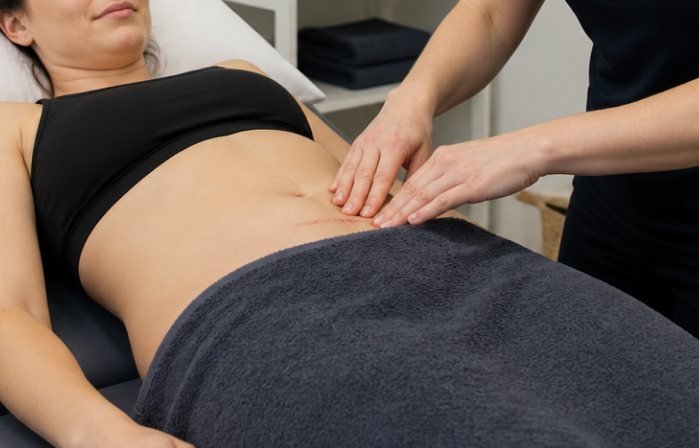
- Caesarean section scar discomfort
- Reduced strength and confidence when exercising
A women’s health physiotherapist can assess your symptoms and develop an individualised rehabilitation programme.
Restoring pelvic floor function
The pelvic floor muscles play an important role in bladder and bowel control, pelvic organ support and sexual function. Following childbirth, some women experience urinary leakage, pelvic heaviness or difficulties activating their pelvic floor muscles.
Pelvic floor physiotherapy can help improve strength, coordination and relaxation through targeted exercises and education.
Diastasis recti and rebuilding tummy strength
Pregnancy naturally causes the abdominal muscles to stretch, sometimes resulting in diastasis recti. Postnatal rehabilitation focuses on improving abdominal strength, control and function through progressive exercises tailored to your recovery.
Managing postnatal pain
Back pain, pelvic discomfort and muscular tension can continue after childbirth. Physiotherapy can help manage these symptoms through strengthening exercises, movement advice and appropriate hands-on treatment.
Returning to exercise safely
Returning to running, gym training or sport after pregnancy requires a gradual approach. A postnatal physiotherapist can assess your strength, pelvic floor function and movement capacity before developing a personalised return-to-exercise programme.
When should you see a postnatal physiotherapist?
A postnatal physiotherapy assessment is commonly arranged from around six weeks after childbirth, although advice and gentle rehabilitation may begin earlier when appropriate.
There is no time limit on seeking support. Whether you gave birth recently or several years ago, postnatal physiotherapy can still be beneficial. You don’t need to be experiencing symptoms to book an assessment, as physiotherapy can also provide reassurance and guidance throughout your recovery.
Antenatal and postnatal physio at Women’s Health Cheshire
We assess and treat conditions after pregnancy and childbirth, including diastasis rectus abdominis (tummy gap) and pelvic floor problems such as prolapse and incontinence. We also offer the Mummy MOT®, however long ago you gave birth.