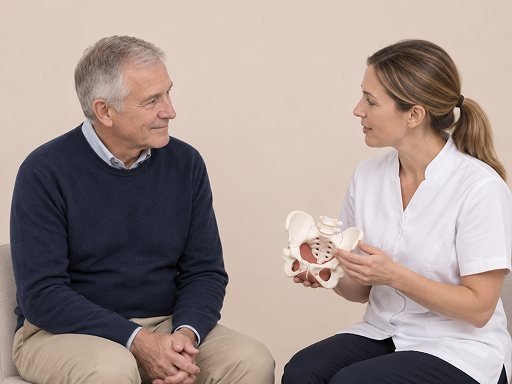
Pelvic health is often associated with women’s health, but men can also experience pelvic floor dysfunction, bladder problems and persistent pelvic pain. These conditions can affect everyday activities, exercise, confidence and overall quality of life.
Men’s pelvic health physiotherapy provides specialist assessment and treatment to help manage these symptoms, restore pelvic floor function and improve comfort and wellbeing. Although pelvic health concerns are common, many men are unaware that physiotherapy can offer non-surgical treatment options.
What is men’s pelvic health physiotherapy?
Men’s pelvic health physiotherapy focuses on assessing and treating conditions affecting the pelvic floor muscles, bladder, bowel and surrounding structures.
The pelvic floor is a group of muscles located at the base of the pelvis. These muscles support the pelvic organs and play an important role in bladder control, bowel function and sexual health. When they become weak, overactive or poorly coordinated, symptoms can develop.
Common conditions treated through men’s pelvic health physiotherapy include:
- Urinary incontinence and bladder leakage
- Frequent or urgent urination
- Persistent pelvic pain
- Pelvic floor muscle weakness or tension
- Bowel control difficulties
- Pelvic floor dysfunction following prostate surgery
Improving bladder control
Urinary leakage can occur due to pelvic floor weakness, changes in bladder function or following prostate surgery. Pelvic floor physiotherapy can help improve muscle strength, endurance and coordination through targeted exercises and bladder management strategies.
Incontinence after prostate surgery
Following prostate surgery, particularly a radical prostatectomy, some men experience urinary incontinence and changes in pelvic floor function. Pelvic floor rehabilitation after prostate surgery can help improve bladder control and support recovery through individualised strengthening exercises and education.
Managing persistent pelvic pain
Pelvic pain may affect the lower abdomen, groin, perineum or surrounding muscles. In some cases, excessive pelvic floor muscle tension or difficulties relaxing these muscles can contribute to ongoing discomfort.
Physiotherapy may include relaxation techniques, breathing exercises, movement rehabilitation and strategies to manage pain.
Improving pelvic floor coordination
Pelvic floor dysfunction isn’t always caused by weakness. Some men experience symptoms because their pelvic floor muscles struggle to relax or coordinate effectively. A specialist physiotherapist can assess muscle function and recommend appropriate exercises, ensuring treatment addresses the underlying problem.
When should men seek pelvic health physiotherapy?
You should consider seeking professional advice if you experience persistent bladder leakage, urinary urgency, pelvic discomfort or difficulties following prostate surgery. Early assessment can help identify contributing factors and provide appropriate treatment.
New or unexplained urinary symptoms should also be discussed with your GP.
Men’s pelvic health at Women’s Health Cheshire
Pelvic health matters for men as well as women. Our physiotherapist won’t carry out an internal examination: instead, transperineal ultrasound can be used to assess your pelvic floor and sphincter control.